Movies
MI–5 aka Spooks: The Greater Good Grade: C-
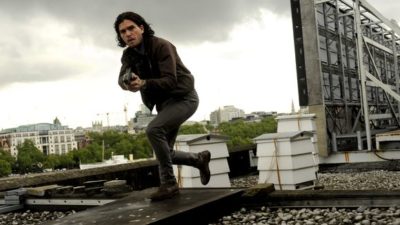 I finally caught up with this movie based on the British TV series MI–5 or Spooks, depending on where you live, from 2015. This film stars Kit Harington of Game of Thrones as Will Holloway, an ex-secret agent brought into the fold when things go wrong, people die the head of MI–5 Harry Pearce (Peter Firth) goes on the run.
Or something — I was never quite sure just what was going on.
I have a complicated relationship with the MI–5 TV series (2002–2011). That show was a sort’a UK version of the TV series 24 and shared both its strengths and weaknesses. Both shows were fast movie and action packed but didn’t have much depth. I remember watching the first season of MI–5 with a lot of interest, but I didn’t watch much of the series after the second season when the episodes started blending together to me. (Though I would argue that the second season episode of MI–5 entitled “I Spy Apocalypse” is a great hour of TV.)
That being said, I was interested in the MI–5 movie when it came out in 2015, though apparently not interested enough to go to the theater to see it or actually pay money outside my cable subscription to watch it.
The MI–5 movie is a lot like the MI–5 TV show, there’s a lot of action, a lot of things happen that if they didn’t happen in exactly the right order would mess up someone’s plan — and they always happen in the right order — and a whole lot of plot holes too. Which makes me wonder, with the MI–5 movie feeling essentially like an episode of the TV MI–5 that stars the guy from TV’s Game of Thrones why was did this need to be a movie at all?
It seems to me that when TV shows become movies that share most of the same cast and crew those movies tend to have a bigger, more expansive story than the TV series or go to places a single episode of TV on a budget couldn’t. Look at something like The X-Files movie from 1998 that featured a bigger story and bigger special effects or even the second Sex and the City movies that took that cast to Abu Dhabi.
The movie version of MI–5 does seem like it has a slightly larger budget than a comparable episode of the show but not much and all of the locations are shot around London, where the TV series took place, or London doubling for some other European local. The movie MI–5 does have the requisite story point of knocking off some of the TV characters in the film. Which now that I think of it, they did a lot of in the show too so even that’s not unique.
Still, even if MI–5 was a good episode of the TV series on the big screen that would have been good enough. But it wasn’t. The story here was absolutely a mess and I was never sure just what the characters were trying to do most of the time. And the end features a plot turn that’s so utterly insane it made absolutely no sense whatsoever.
Everest Grade B+
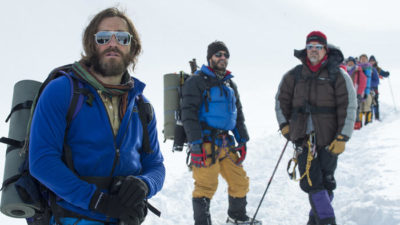 Another movie from last year that I just caught up on was Everest. And, unlike MI–5, I thought Everest was really good.
Everest tells the real story of an ill-fated climbing expedition of Mt. Everest in 1996 where eight climbers were caught in a storm and died. The movie plays out as a disaster film where we’re introduced to characters based on real people at the start of the movie and get to know them as the story progresses. Which means that when things start going wrong in Everest at about the half way mark we feel for them.
When the 1996 event happened I remember hearing about it on the news and watching documentaries based on it years later. So I felt going into Everest that I had a good grasp for what was going to happen. What I didn’t realize was exactly how the disaster unfolded, how conditions kept getting worse and worse as little mistakes that alone probably wouldn’t have amounted to anything started adding up and costing lives.
Like the group trying to summit Mt. Everest getting stuck waiting for ropes to be installed to help them get over a difficult part of the mountain. Or a limited supply of oxygen at the top of the mountain. Or a mountaineer having vision problems waiting for a person to come down and meet him rather than simply going down the mountain with another group…
Alone these issues probably wouldn’t amount to anything. But here, together, and with a blizzard raging over the mountain would lead to all those deaths. Which makes me wonder how many times other groups going up Mt. Everest get into the same kinds of situations, but are able to get out of it without anyone dying since things go their way instead of against them?
The first half of Everest is an introduction to the characters and life on the highest mountain in the world. The last half is essentially the ill-fated climb. The climb starts at midnight the day of the summit, then goes until around noon when the actual summit’s supposed to take place with everyone heading back down by 2PM. Except here, with all these mistakes holding the group up then the blizzard tearing across the mountain ends up causing havoc as the group splinters, some of the climbers becoming lost and others trapped in a place where they literally can’t breath.
And as rescue attempts are mounted, it slowly becomes apparent that for some of the climbers, still very much alive, rescue simply isn’t possible.
I think what helps and kind’a hurts Everest is that since it’s based on a true story there’s never any one big “Hollywood” moment where a team of heroic climbers are able to rescue the lead characters and bring them down alive. Since that didn’t happen in real life, it doesn’t happen here. Especially since where you’ve reached a certain altitude on Everest that kind of rescue is impossible since the air’s so thin that it takes all a person has just to get themselves down, let alone another.
I do think it’s that realism that ultimately benefits the movie since the story never ever has that moment of the climbers emerging out of the storm unscathed unlike what happens in most fictionalized mountain climbing movies.
BTW — I was surprised just how full Everest was of movie stars — or at least a lot of recognizable faces from Josh Brolin, John Hawkes, Kiera Knightley and Jake Gyllenhaal to name a few.
This week in pop-culture history
- 1954: Them! premiers in theaters
- 1958: Bruce Campbell of The Evil Dead films and TV series is born
- 1976: Logan’s Run premiers in theaters
- 1981: Superman II opens
- 1983: The movie Twilight Zone premiers
- 1987: Spaceballs opens in theaters
- 1989: Tim Burton’s Batman is released
- 1991: The Rocketeer premiers in theaters
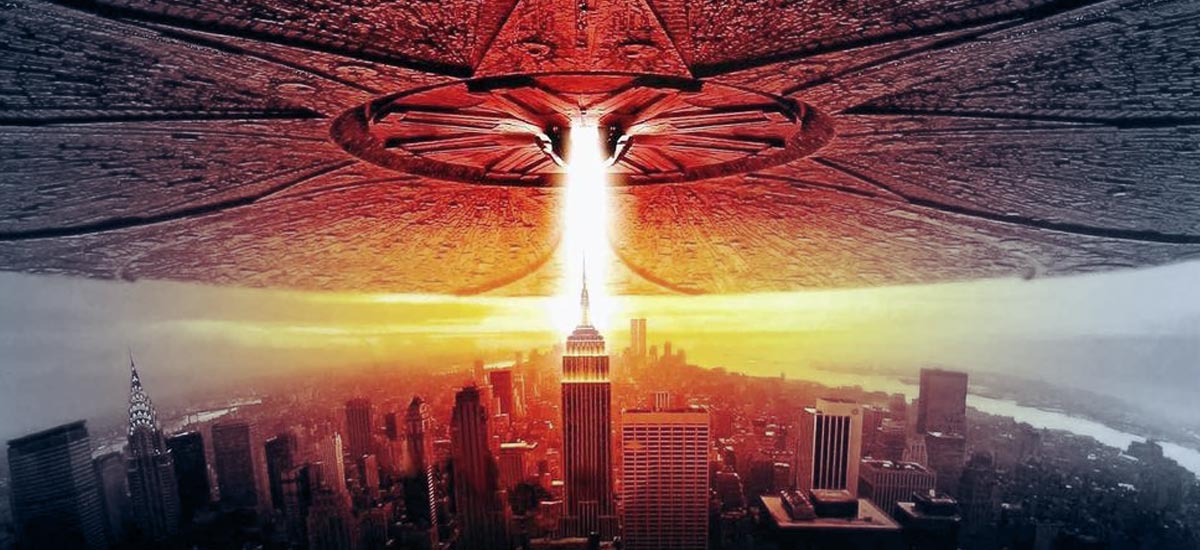
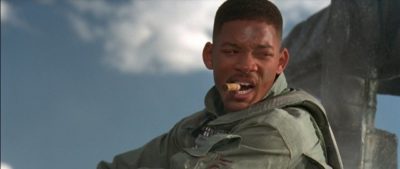
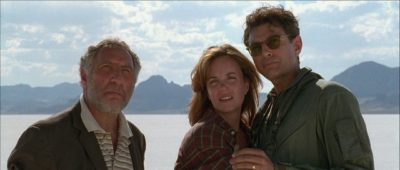
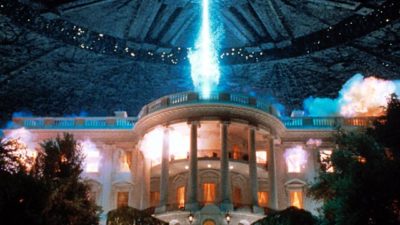 Later on in 1996 when ID4 was being released on VHS the excitement over that movie coming out on home video was palpable too. I remember standing in the lobby of a OnCue and watching the VHS commercial/trailer for ID4 over and over and over again. I bought ID4 when it came out on VHS and even “upgraded” my purchase years later by buying a bootleg VHS director’s cut of the movie dubbed from Laserdisc.