The urban street wars of sci-fi that never were

One thing I’ve always been interested in with movies and TV is the idea of what creators from the past thought their future was going to be like. It’s like with the movie 2001: A Space Odyssey. Back in 1968 when writer Arthur C. Clarke and director Stanley Kubrick projected out 33 years into their future they took into account all of the things that were happening around them like sending man into space and then to the moon in just a few short years. To them, if we could do all that just think of all the wonderful things we’d be doing three decades in the future. Surly by 2001 we’d have space stations (correct), corporations would be flying shuttles into space (not in 2001 but this is happening today) and we’d have a colony on the Moon and sending astronauts to Jupiter would be doable (we’re no where near this even today).
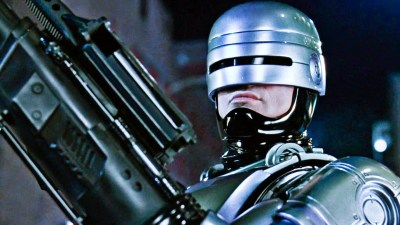
RoboCop
RoboCop

But where Clarke and Kubrick looked ahead and saw a wonderful future the creators of some sci-fi films of the 1980s and early 90s thought their futures would be crummy. The producers of the three RoboCop movies, RoboCop (1987), RoboCop 2 and RoboCop 3 (1993), looked forward a few years in their future and saw nothing but a world of mega corporations and out of control crime engaged in urban warfare with the police.

In the world of RoboCop the future Detroit is dominated by Omni Consumer Products (OCP) who now operates the police department among many things and intentionally keeps them chronically underfunded and understaffed. They see a weak police force as allowing crime to flourish in Detroit giving gangs control of the streets and allowing OCP to sell more things they make like RoboCop and the hulking ED-209 to governments desperate for a solution.
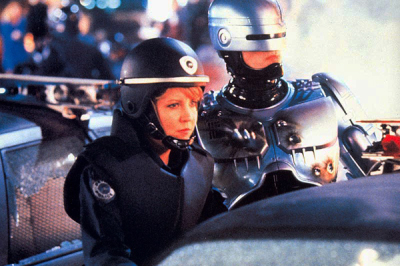
Detroit's finest
Detroit’s finest

In the world of RoboCop it’s like these street gangs are a department of OCP and are indirectly if not directly benefiting the corporate bottom line.

Crime has gotten so bad here that it’s more of urban, guerrilla war between heavily armed gangs and the police dept. And because the criminals are now armed to the teeth with things like machine guns and rocket launchers, the average Detroit beat cop now looks more like a modern day SWAT trooper issued with a combat helmet, body armor and machine guns of their own.

The first RoboCop has a gang lead by Clarence J. Boddicker (Kurtwood Smith) blowing the city apart bit by bit and killing as many cops as they can in the process. This benefits OCP by driving up interest in their RoboCop project as well as their plan to create a new Detroit city on the ashes of the old. And in RoboCop 2 the cops are on strike and crime is totally rampant. The streets are ruled by drug pushers who blow up rehab clinics and gangs go around robbing whatever they can without consequences.
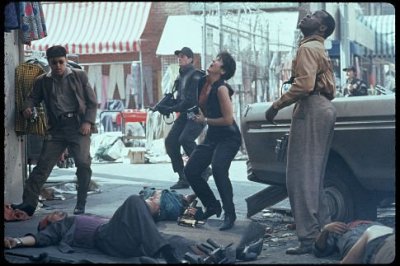
Urban combat in Predator 2

RoboCop 2 introduces a new villain, aptly called RoboCop 2, who at the end of the movie battles it out with Detroit’s finest as well as RoboCop too in scenes that are more akin to newscasts from the frontlines of the war in Vietnam than anything else.

Another film that looked forward and saw a it to be a time very bad for the police was Predator 2. That movie takes place in a 1997 Los Angeles where Colombian street gangs engage in an open street war with the police who don’t scare them a bit. They’re afraid of rival Jamaican gangs who like to use knives and machetes to do their dirty work. Here too the police are more like a heavily armed SWAT team with even detectives carrying big laser-aimed handguns.

It’s easy to see why the creators of these films thought their future cities would be full of roving gangs and running shootouts. Back in the late 1980s when these films were being conceived/created there was a sense that crime was out of control with street gangs blasting the streets of cities like LA and Miami. Projecting out from there, thinking about what was going to happen in the next decade or so would lead to a place like that of Detroit in the RoboCop films or Los Angeles in Predator 2.

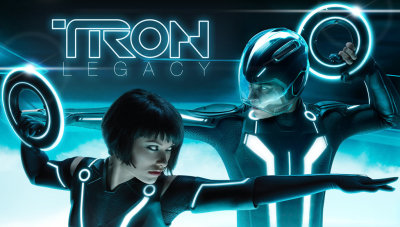
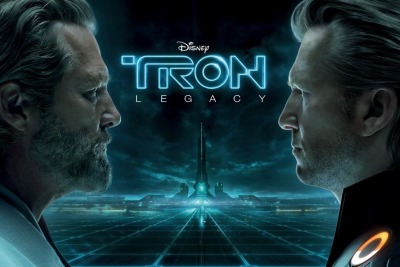
Bum Rap – TRON: Legacy

I really thought I was going to hate TRON: Legacy (2010) before I actually saw it. It was a movie that didn’t seem to generate a lot of good “buzz” before release, got bad reviews when it did come out and just didn’t seem all that hip or cool to begin with. Who makes a sequel to the movie TRON (1982) that at that point was nearly 30 years old and didn’t do that well at the box office to begin with? That was the question no one seemed to ask before TRON: Legacy went into production.

Garrett Hedlund and Olivia Wilde

So I only saw TRON: Legacy when I caught it during a free Starz weekend one Saturday night a year or so after its release. Even then I only happened to start watching it at about the mid-point scene where Castor (Michael Sheen) is shooting light…things(?) out of his cane during the big bar fight. I couldn’t believe how weird the whole thing looked. But even then there was something about the visuals and what story I’d seen that piqued my interest so I DVRd a later showing and watched it the next day.

And watching the movie from the beginning I was actually kind’a surprised — I found TRON: Legacy to be pretty great. Unlike a lot of other big-budget movies of similar theme, TRON: Legacy has an interesting story mixed with action along with slick CGI visuals. And at least here, set inside the world of a computer, these slick CGI visuals actually make sense.

Jeff Bridges as Kevin Flynn / Clu

What’s really interesting about TRON: Legacy from a fan standpoint is that it’s a true sequel. Who else does that where today it’s normal for similar movies to do a “reboot” every few years? There were ten years between Spider-Man 3 and The Amazing Spider-Man reboot. The American version of Godzilla had 16 years between reboots. And there were 21 years between Teenage Mutant Ninja Turtles reboots. With the TRON movies there’s that nearly 30 year gap between the first and second and it’s like the creators of the movies figured they’d be able to explain enough in the story of TRON: Legacy as to what happened during those years for the audience to keep up.

“Tron, what have you become?”

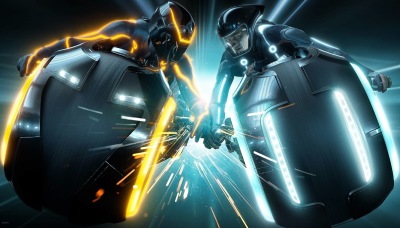
The Grid
The Grid

In the original TRON, Kevin Flynn (Jeff Bridges) created a computerized universe and was digitized himself and placed on the “Grid.” There in the computer, Flynn played life and death games and fought to free the programs of this universe from the Master Control Program. And told in flashbacks in TRON: Legacy, Flynn delved deeper into the world of TRON and created a program that was a duplicate of himself, Clu. But just when he was on the verge of a major discovery Flynn went missing. Now, about 20 years later, Flynn’s grown son Sam (Garrett Hedlund) goes looking for him and finds his father in the most unexpected of places; trapped in his computerized universe that’s been running and evolving with a despot Clu looking for Flynn’s head and a way off the Grid.

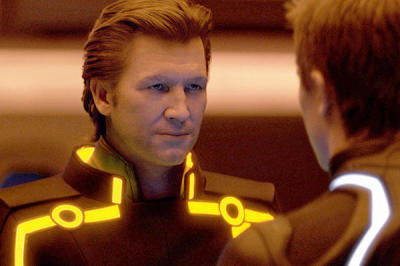
Jeff Bridges as Clu
Jeff Bridges as Clu

Essentially, TRON: Legacy is an effective chase film, with Clu chasing Flynn and Sam along with program Quorra (Olivia Wilde) all looking for some means of escaping his computerized universe and slipping into ours. This, along with the mostly spectacular special effects, makes TRON: Legacy one of the better big budget computer effects driven action movies of the last decade.

I do say that the special effects are “mostly spectacular” because of one glaring issue with TRON: Legacy; the character of Clu. Not with the actual character, he works well. What mostly doesn’t work is the 3D effects used to bring Clue to life. In the movie Jeff Bridges plays Flynn as a 60 year old man and computer effects are used to create the face of Clu as Bridges looked in the original TRON as a spry 30 year something man. When these effects work the younger Bridges/Clu looks great. When it doesn’t it comes off creepy and fake.

Otherwise, though the creators of TRON: Legacy have created a true artificial world almost entirely in the realm of 3D computer effects.