TV
Philip K. Dick’s Electric Dreams ***/****
TV series and movies over the last several years have mined many of author Philip K. Dick’s ideas. Mostly known as the writer of novels like Do Androids Dream of Electric Sheep? and We Can Remember It for You Wholesale which were turned into mega-movie-blockbusters Blade Runner and Total Recall, over the years Dick was a prolific writer having penned hundreds of stories and novels. One of Dick’s favorite themes was the notion of how can you be absolutely sure that reality is, well, real, and how can you tell a simulation from the real thing if the simulation is perfect in every way?
 These themes Dick would turn to again and again just so happen to be the themes of several popular TV series these days that, while aren’t based on a specific piece of Dick’s work none-the-less are based on his ideas.
Shows like Westworld with robots who live and work inside a theme park that don’t know they’re robots would be right at home in Do Androids Dream of Electric Sheep?. And the battle that takes place inside of character David Haller’s mind on the show Legion fits perfectly with the themes explored in We Can Remember It for You Wholesale. Even a show like Black Mirror that owes a great debt to the series The Twilight Zone owes an even bigger debt to the works of Dick. Time and again episodes of that show explores the notion of a reality altered by some technology gone amok with the episode entitled “Metalhead” being directly influenced by Dick’s story “Second Variety” that was also adapted as the movie Screamers.
Even one of Dick’s own books The Man in the High Castle about an altered reality where Germany and Japan both won WW2 is currently a series on Amazon Prime, to which a new anthology series entitled Philip K. Dick’s Electric Dreams joined last week.
This series originally aired last year in the UK and now all episodes are currently available to stream on Prime.
In the first episode entitled “Real Life” that takes place in a somewhat distant future, detective Sarah (Anna Paquin) is trying to get over the murder of 15 of her colleagues. To help her relax Sarah’s significant other Katie (Rachelle Lefevre) suggests she try spending some time in a virtual world where she’ll be able to forget real life and take part in a simulated one. In this virtual world Katie becomes George (Terrence Howard), a billionaire software tycoon living in a time just a few years from our own investigating the murder of his wife. As Sarah starts spending more time in the virtual realm as George and things there begin to collide with things in Sarah’s “real” world, from people to places to the fact that George’s dead wife is also named Katie and also looks like Sarah’s Katie. Sarah begins questioning which is the real life and which is the virtual one? Is Sarah living in a futuristic world where there are literally flying cars, or is George’s reality of having to fight through the pain of losing a loved one real instead?
From start to finish “Real Life” was Philip K. Dick 101 with questioning and examining the nature of reality with one heck of an ending. I thought I had the ending pinned down at about the halfway mark of “Real Life” but wasn’t anywhere close as to where the episode went.
To me, Electric Dreams is modern Outer Limits in tone and structure, it’s very much more of a story and idea driven show than a character one, but I don’t think this is a bad thing. In fact I liked Electric Dreams a great deal and would probably not like it as much is it were something like a clone of Black Mirror.
Krypton TV spot
Movies
The Movie Chain: #2: The Abyss (1989)
The Movie Chain is a weekly, micro-movie review where each week’s film is related to the previous week’s movie in some way.
Last week: The Hunt for Red October
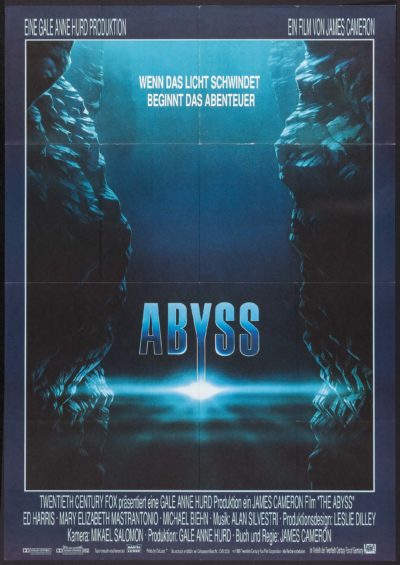 In the 1980s writer/director James Cameron was on a bit of a hot-streak. While his first film Piranha Part Two: The Spawning was forgettable at best, his next were to become two of the most beloved films of the sci-fi genera; Terminator and Aliens. So when Cameron’s next movie was announced to close-out the 1980s with The Abyss in 1989 fans of sci-fi were excited. This movie about the crew of an undersea mining platform who when a disaster strikes are simultaneously stranded at the bottom of the ocean while also discovering that there might be alien life down there probably had too many expectations going against it to ever reach the heights of the likes of Terminator or Aliens. While those other two films are both fun, action “shoot-em-up” movies, The Abyss, while having some action in it, is more of a thinking person’s movie.
Much like with The Hunt for Red October there’s a strong “techno-thriller” vibe running through this film. There’s even a nuclear sub in The Abyss that could have been used directly in The Hunt for Red October without any changes.
Both The Abyss and The Hunt for Red October were a part of a group of films at that time period that all took place at the bottom of the sea. In addition to those two there were the cheapy flicks DeepStar Six and Leviathan both from 1989 too. If The Hunt for Red October is a great film and The Abyss a flawed sort of masterpiece then DeepStar Six and Leviathan are both fun, if a bit dated, “b” or “c” grade schlock fare.
Next week: Let’s party like it’s 1999.
Black Panther TV spot
Cool Movie Poster of the Week

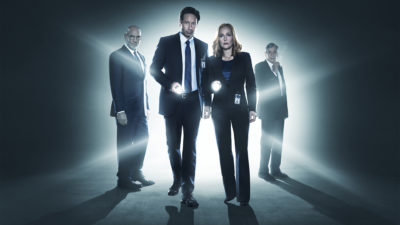 The 2016 season divided viewers of the series. On the one hand, some wanted The X-Files to be setup like more modern series with a strong season-long story. On the other were people, myself included, who thought that the six-episode continuation of The X-Files was just that, a “continuation,” so why mess with success?
 I think the concept of *LA to Vegas is a strong one where each episode stars the crew of the plane, the regular passengers and new passengers who cycle in and out as well. The first episode’s new passengers were a couple who’d set off to Vegas to elope, but where the boyfriend ends up coming home alone and unmarried in the end.
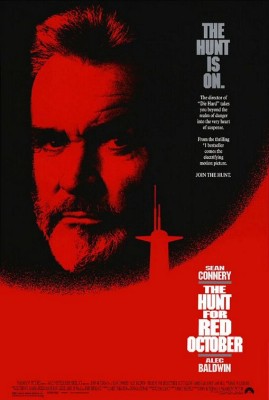 The Hunt for Red October is one of my favorite movies of the 1990s. Based on the book of the same name by writer Tom Clancy, The Hunt for Red October became the prototypical “techno-thriller” that was very popular in that time period where the technology of the movie, here a submarine that is silent and undetectable and therefor could nuke the US without warning, is as important as the characters or story. Most of The Hunt for Red October deals with the captain of said Soviet submarine (Sean Connery). Trying to help is CIA agent Jack Ryan (Alec Baldwin) who has to figure out how to help him pull the defection off without a) getting everyone aboard the sub killed in the process, b) not letting the Soviets know what’s happened and, most importantly, c) not accidentally starting WWIII.
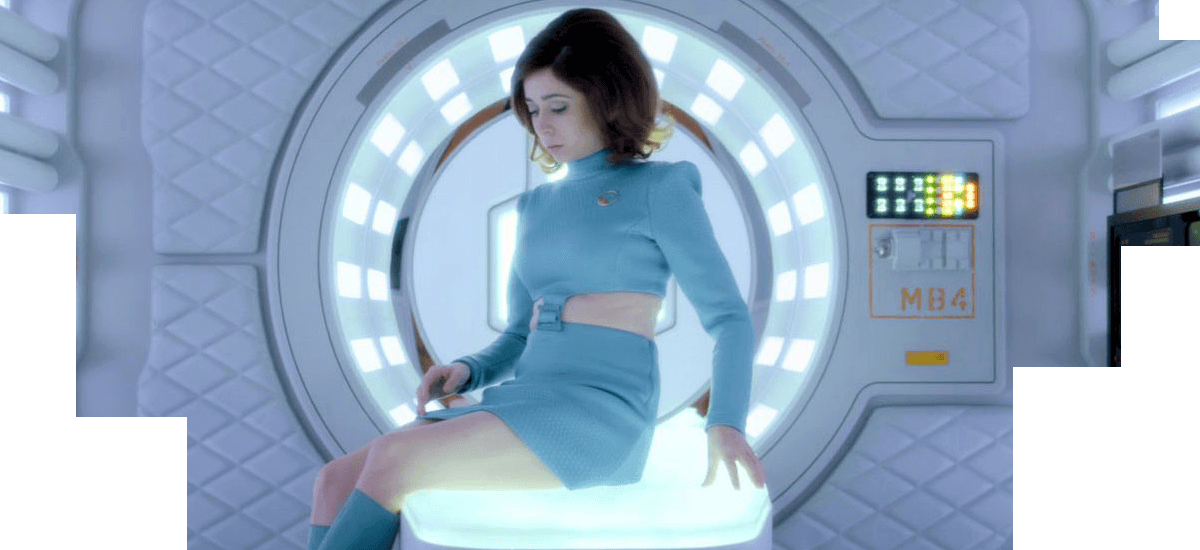
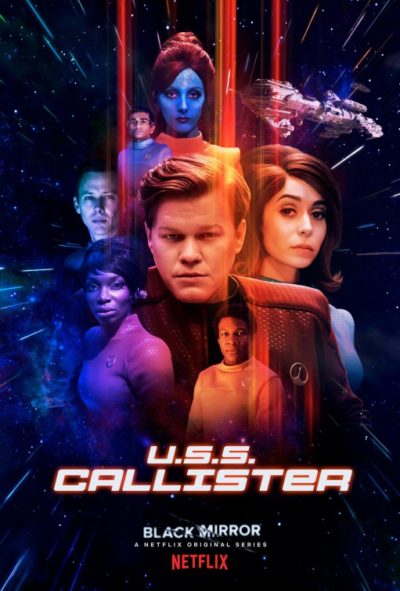 A few years back Netflix picked up the show and suddenly what was very difficult to see became very easy with the outlet streaming old episodes along with brand new ones. And now comes a fourth season of Black Mirror beginning with a first episode titled “USS Callister.”