Bill & Ted’s Excellent Adventure (1989) poster
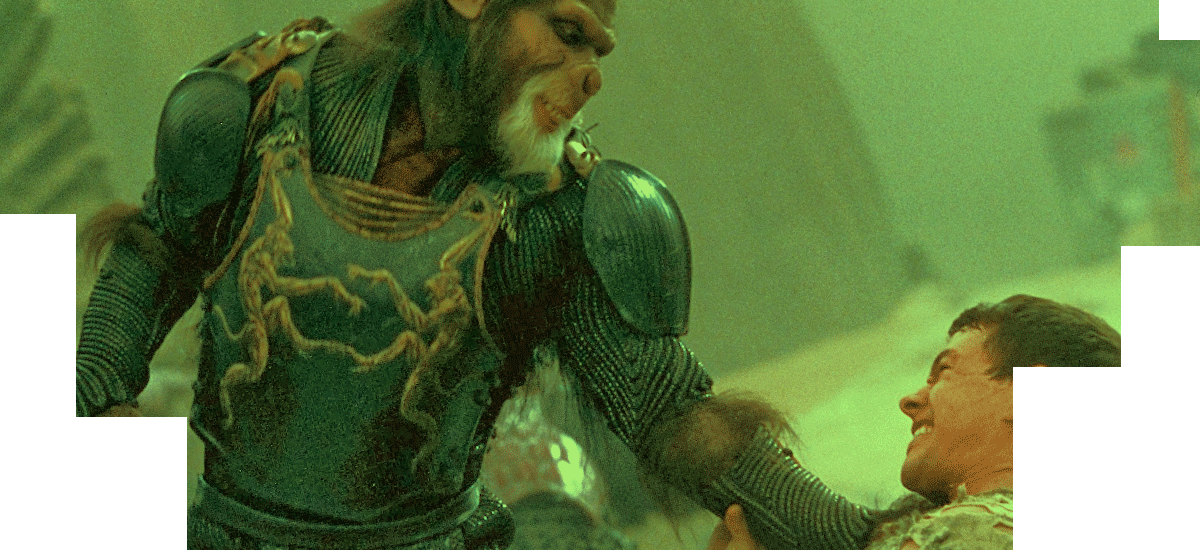
There was a 28 year gap between the last of the original Planet of the Apes movies in the 1970s and the very first remake, but I think a lot of people forget that the first remake wasn’t the fabulous Rise of the Planet of the Apes in 2011 it was instead Tim Burton’s Planet of the Apes in 2001.
Burton’s movie was savaged by critics and fans alike, especially with its time-bending final scene that left movie goers scratching their heads as they left the theater. I didn’t much care for Burton’s Planet of the Apes the first time I saw it either — though admittedly the first time I saw it was via VHS on a little 13” TV so it wasn’t the most optimal experience to begin with. But still, after I saw Burton’s Planet of the Apes 16 years ago I never really checked out the movie again until a few weeks ago when I caught it on cable. I think watching it now without a lot of the negativity that was swirling around the movie back then let me see it in a different light. While Burton’s Planet of the Apes isn’t his best movie, it’s not the worst Planet of the Apes movie either. In fact, it’s kind’a good.
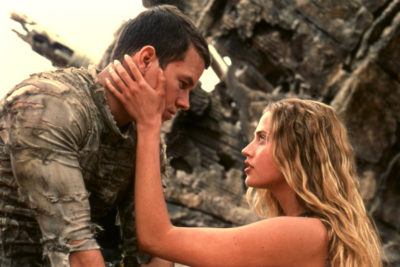 While the most recent Apes movies are sort of reverse sequels/not quite prequels to the original 1960s and 1970s movies, Burton’s Planet of the Apes is a remake of the original film. There were attempts at rebooting the Apes franchise in the 1980s and 1990s, the most famous example of which would have starred Arnold Schwarzenegger in the title role with Oliver Stone, yes, that Oliver Stone, directing. But for whatever reason it wasn’t until 2001 and Burton’s film that the apes would return to the big screen.
Here, astronaut Leo Davidson (Mark Wahlberg) finds himself marooned on a weird planet where apes are the dominant species and mankind are seen by them as pests. Davidson finds help from ape Ari (Helena Bonham Carter) who go on the run from the evil General Thade (Tim Roth) who wants Davidson dead.
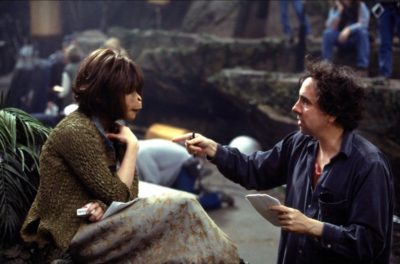
Which is essentially the plot of the first 1968 Planet of the Apes movie that starred Charlton Heston, but there is one big difference here between the 1968 Apes and the 2001 version — the direction of Tim Burton.
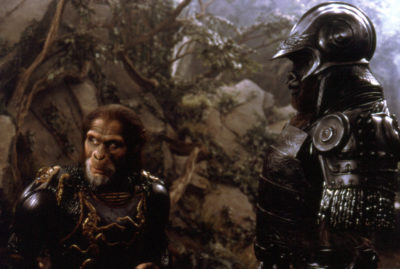 Honestly, Burton isn’t given enough credit these days for the films that he’s directed. Or, at the very least, he’ll be a director when we one day look back at his career and tremble at how good it was and how little respect he got for his work when it was released.
To name a few, Burton directed the greatest superhero film of all time Batman in a time when superhero movies were considered kid’s stuff. He directed Beetlejuice, a movie so good it’s still relatable 30 years later. And he directed Big Fish a movie I’ve only been able to stand watching once, because I’m afraid if I ever watch it again I’ll spend most of the movie lost in emotions.
Oh, and he also directed that Planet of the Apes movie too.
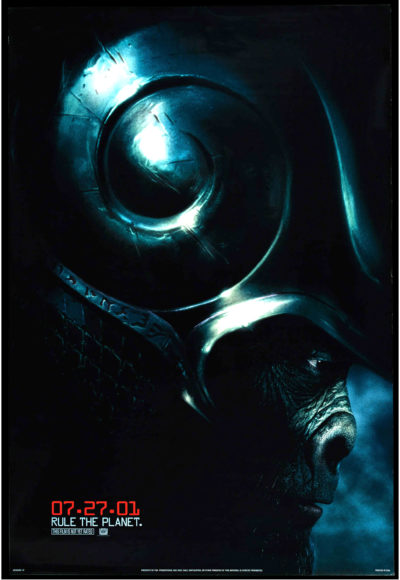 Now, Planet of the Apes isn’t Burton’s best movie, but it’s still a solid film. Plus, mostly known as a horror director, it’s one of only two sci-fi movies Burton has directed, the other being Mars Attacks. For that reason alone I think fans of the genera should have a special place in their hearts for this film. Burton’s Planet of the Apes has all his weird and wonderful stylings from the design of the apes costumes and villages to the weird and wonderful headgear the apes wear in this film.
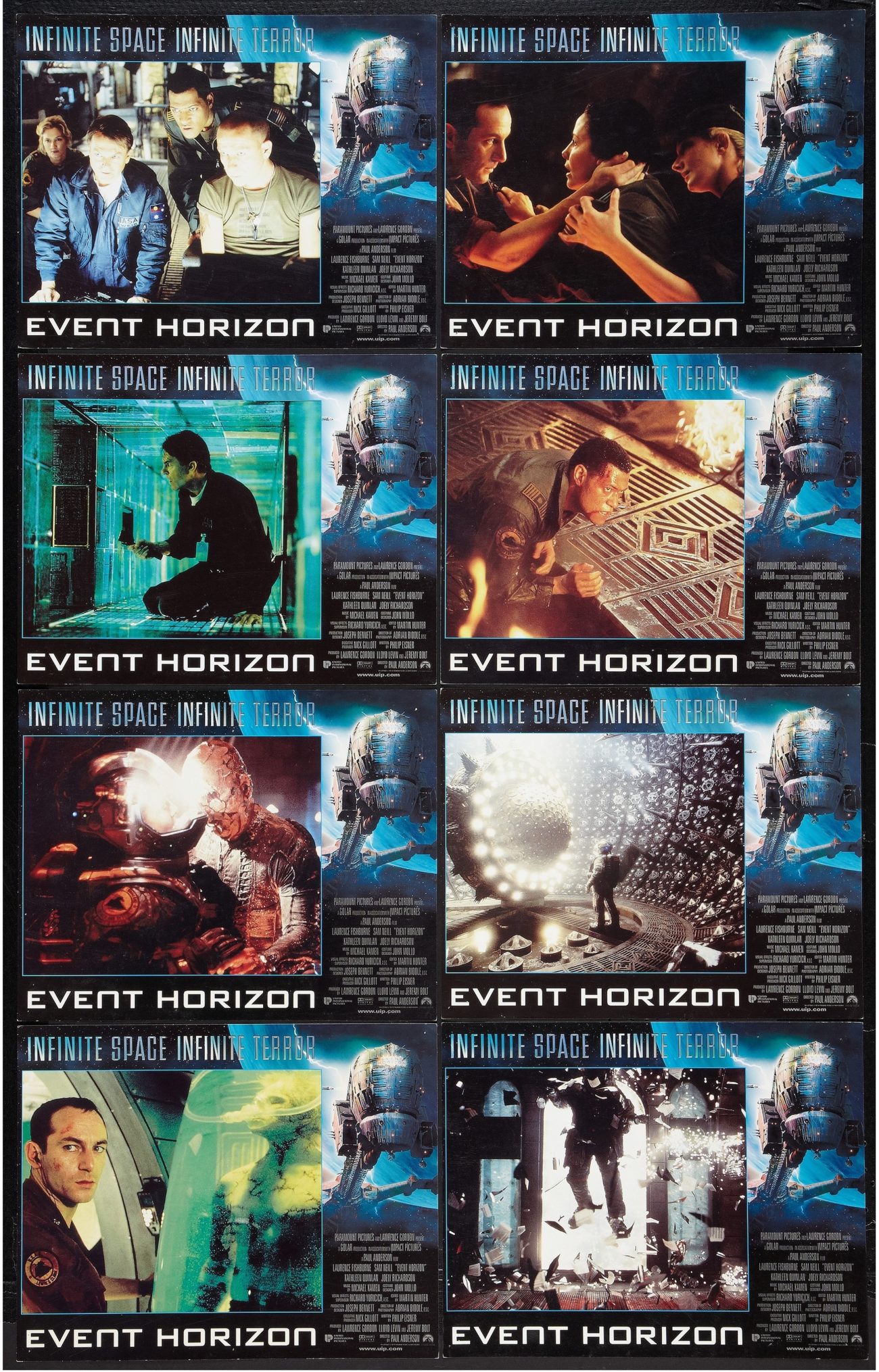
I might have not liked the movie at the time of release but I sure did like the posters from it that focused on the style of the movie — I ended up buying several of them back then.
Burton’s Planet of the Apes never lived up to its potential and barely made back its budget at the box office. Which would mean the franchise would go dormant for another decade before it would be rebooted again with Rise of the Planet of the Apes. Now, the third movie of that series War for the Planet of the Apes is out July 14 that’s supposedly the finale to that franchise.
It might be a while for Burton to return to sci-fi. His next movie is supposed to be a live-action remake of the animated film Dumbo then Beetlejuice 2.

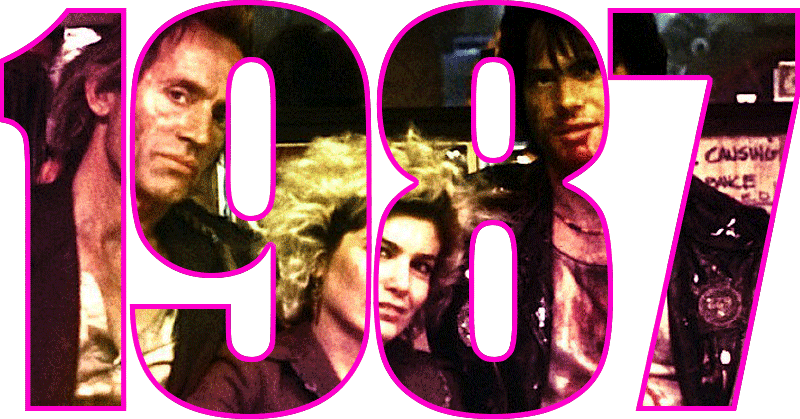
In 1987 there were two teen vampire movies, the first of which was The Lost Boys released at the end of July and the other was Near Dark in September. Both films are dealing with essentially the same subject of a young man being lured by a woman to become a new member of a vampire family but each movie approaches that plot in wildly different ways. While in many regards The Lost Boys is almost a perfect 1980s horror movie time capsule from actors used, fashion, soundtrack, etc. Near Dark instead was a horror film that took its inspiration from the southwest and cowboys with all the references those entail, and rather than being teen-friendly flick was instead a gory horror movie.
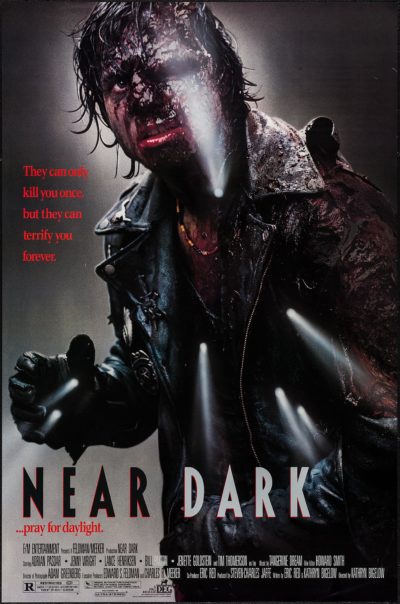 And while I’m a sucker for 1980s gory horror movies, I’m don’t think that Near Dark has stood the test of time the last 30 years. But I will say that two scenes in Near Dark* alone make it worth checking out that movie today.
Co-written and directed by Kathryn Bigelow who today is known for films like The Hurt Locker and Zero Dark Thirty, Near Dark is about Caleb (Adrian Pasdar). Caleb’s a cocky 20-something kid living with his dad and sister in Texas who one night is seduced by a woman named Mae (Jenny Wright), is bitten and is inducted into a family of vampires who roam the backroads of the south and pick off the stragglers of society in order to feed their need for blood. Headed by Jesse (Lance Henriksen) the family consists of members Dimondback (Jenette Goldstein), Severen (Bill Paxton), Homer (Joshua John Miller) and Mae. Giving off a Manson family vibe but in an RV, these modern vampires are on a road trip from hell stopping at every small town they cross to have a little fun and drain some people of all their blood. These aren’t the flashy vampires of The Lost Boys wearing cool, modern clothes. The vampires of Near Dark are dirty, smelly and have no use for modern society.
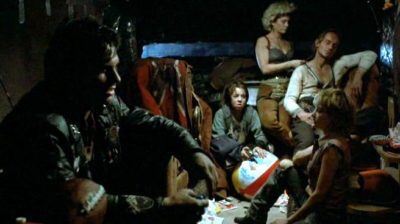 The crux of the movie is even though Caleb’s been turned to a vampire, he’s not yet a member of Jesse’s family until he’s killed someone on his own. And because the vampires need to feed is like a junkie’s need to get a fix, it’s all Caleb can do to not act on his impulses and end someone’s life for a little blood and cross over to the dark side.
To be honest, Near Dark is a decent movie, if a little too earnest in tone. The movie does have a surprising amount of blood and gore considering that it’s a film that’s directed at teens. But otherwise, Near Dark isn’t a bad movie, but it isn’t a very good one either.
However, there are those two scenes that elevate Near Dark to something else.
The first scene is of the vampire family in a bar there to help Caleb make his first kill. Inside are a few patrons, and since you really can’t kill a vampire by conventional means the family are totally unafraid of anything the patrons can throw at them be it billiard balls or shotgun blasts. Don’t think this scene takes place in a melee of action. It’s a surprisingly slow burn as the people inside the bar think they have the upper hand on these crazy out-of-towers but slowly realize they don’t and finally are slowly, shall we say, consumed one at a time some frozen in place with fear.
 The other scene is of a gunfight in a motel after the bar scene. Here, one of the patrons escaped the bar and has brought the police to the vampire’s room. The family aren’t scared of the cops and their guns, but what they are scared of is that the police have arrived during the day and daylight hurts them. So there’s this big shoot-out and the cops are shooting into the room and the family out. Bullets hurt the vampires but can’t kill them. What really hurts the vampires are the shafts of sunlight that’s let into the room from all the bullet-holes in the walls. These shafts hit harder than any bullet and hurt worse than any rifle shot. And at one point Caleb has to run out of the room to get the group’s car and catches fire before he’s able to get back into the shade and put himself out. Since he’s a vampire the burns hurt, but they go away.
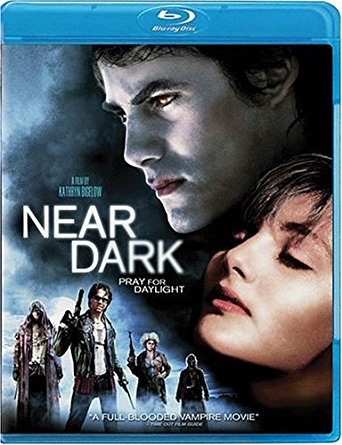
Near Dark isn’t the perfect movie but it’s got a lot going for it, if you can look past a slow start and a head scratching “would that really work?” ending. In recent years marketing materials have shied away from those used 30 years ago, which featured a blackened, bloodied and shot full of holes Severen to instead feature the faces of Caleb and Mae doing their best imitation of the characters from Twilight. Now there are some elements of Romeo and Juliet in Near Dark like Twilight, but on the whole Near Dark is more The Evil Dead 2 than something sappy like Twilight.
I don’t think The Lost Boys* has either.